

We think outside the box.
Because we know that people can begin a positive health journey from anywhere.
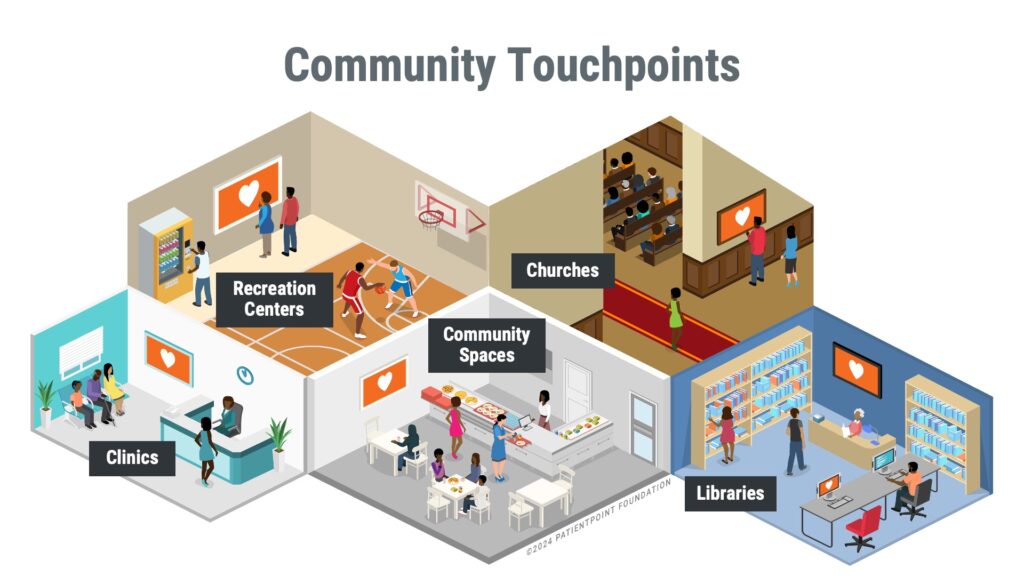
The Foundation is actively involved in high-priority communities where the data on health metrics and patient outcomes shows a clear disparity. With the resources and support of our partners, we introduce proven technology and health education into the community. And PatientPoint Foundation is pioneering unconventional places to successfully engage a population and use technology and health literacy content to enhance lives.
We think outside the box. Because we know that people can begin a positive health journey from anywhere.
Key Strategies:
- Engage and mobilize any healthcare stakeholder who shares our vision of improving health equity.
- Leverage trusted resources in the communities we serve to help us connect with people and people to connect with providers.
- Leverage technology, health coaches, and health ambassadors to measurably improve the quality of care.
- Ensure Providers are conducting SDoH screenings so we can connect people to the appropriate support resources.
- Maintain an outcomes-based (not an activity-based) mindset.
- Employ best-in-class data analytics and outcomes analyses to track impact and refine approach.
The Digital Introduction
PatientPoint Foundation’s two-pronged approach leverages and reapplies health education content that consistently merited Hermes awards, including a 2021 Hermes Creative Platinum Award. The content has been demonstrated to have a positive impact on patient behaviors and health outcomes. Most importantly, the content PPF employs has been shown to prompt individuals to more deeply engage in their own unique health journey.
- Understanding and adopting healthy behaviors
- Selecting a PCP and scheduling/keeping routine visits
- Health screenings and other pre-emptive health appointments
- Compliance with treatments and prescriptions
Resulting in (for example):
- A 20% increase in colon cancer screenings
- A 28% increase in flu vaccines
- A 43% increase in tobacco cessation counseling
Source: Results of matched pair analysis using longitudinal patient medical claims; 12-month total impact for colon cancer screenings and tobacco cessation, 3-month total impact for flu vaccines
Health Education Screens
- Increase engagement around health and wellness with award-winning education, healthy living content, and messages from the community or organization.
- Customizable video loops with health education content, messages, and announcements most relevant to the community and the audience.
Interactive Screens
- Improve health outcomes with specialty-specific multimedia education and health information.
- Enhance one-on-one engagement with 3D anatomicals to help explain health conditions and diagnoses.
- Text or email education directly from device.
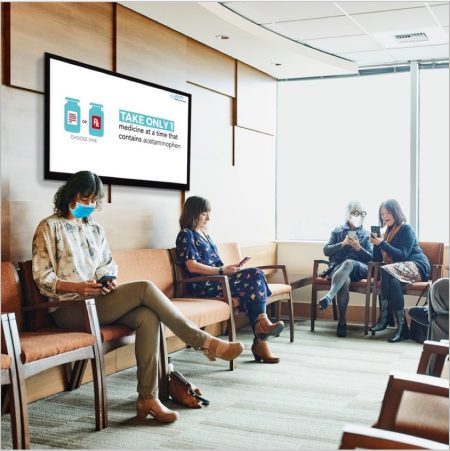
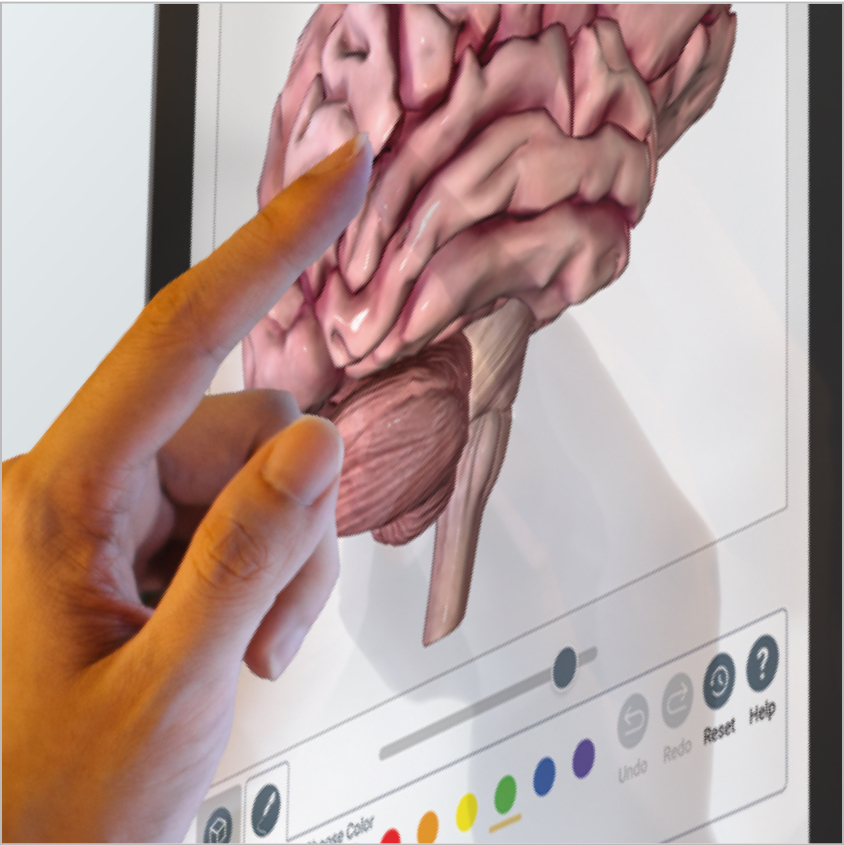
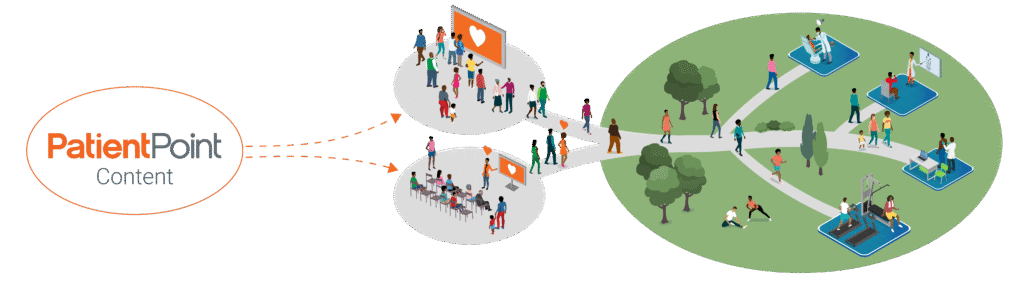
We bring this content into communities that don’t have regular access to health information and we go to seek out the areas within those communities where we can begin to drive the most impact.
The Human Connection
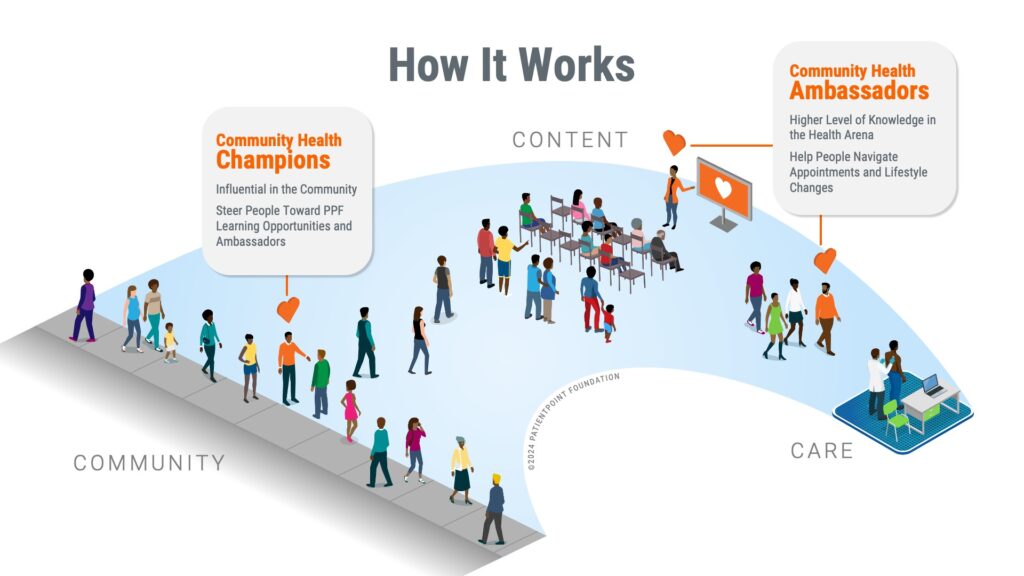
Community Health Champions and Ambassadors, selected from the communities in which they reside, serve as the support system, connecting the people around them with the health information on the screens and pointing them toward healthcare resources right in their own neighborhoods. They are trusted voices who can help guide others in their health journeys.
From Health Disparity to Health Equity through Health Empowerment
Improved health literacy where we have a footprint
Greater Sense of empowerment as it relates to health
Increased healthy behaviors demonstrated
Greater engagement with health coaches and healthcare providers
Improved health metrics and health outcomes
Our Communities in Action
Cincinnati, OH
The Village of Lincoln Heights was founded in the 1920s as a suburb for Black homeowners. In 1946, it was incorporated as a village. Lincoln Heights was the first African American self-governing community north of the Mason-Dixon Line. Right now, the Village of Lincoln Heights is working on improving its infrastructure, health of residents, education, income equality, parks and recreation, maintaining a financially thriving community and providing job opportunities for the whole community.
Columbus, OH
Situated northeast of Downtown Columbus, the Linden area is a historic neighborhood with about 18,000 residents. First developed as Linden Heights Village, the area grew into a bedroom community with a vibrant commercial district along Cleveland Avenue. Many challenges have persisted for decades in Linden, including lower-than-average health, employment, and education for its residents. The Linden community generally exhibits lower health indicators than the Franklin County average. Perhaps most striking, life expectancy for Linden residents is 8 years shorter than the Franklin County average.
Chicago, IL
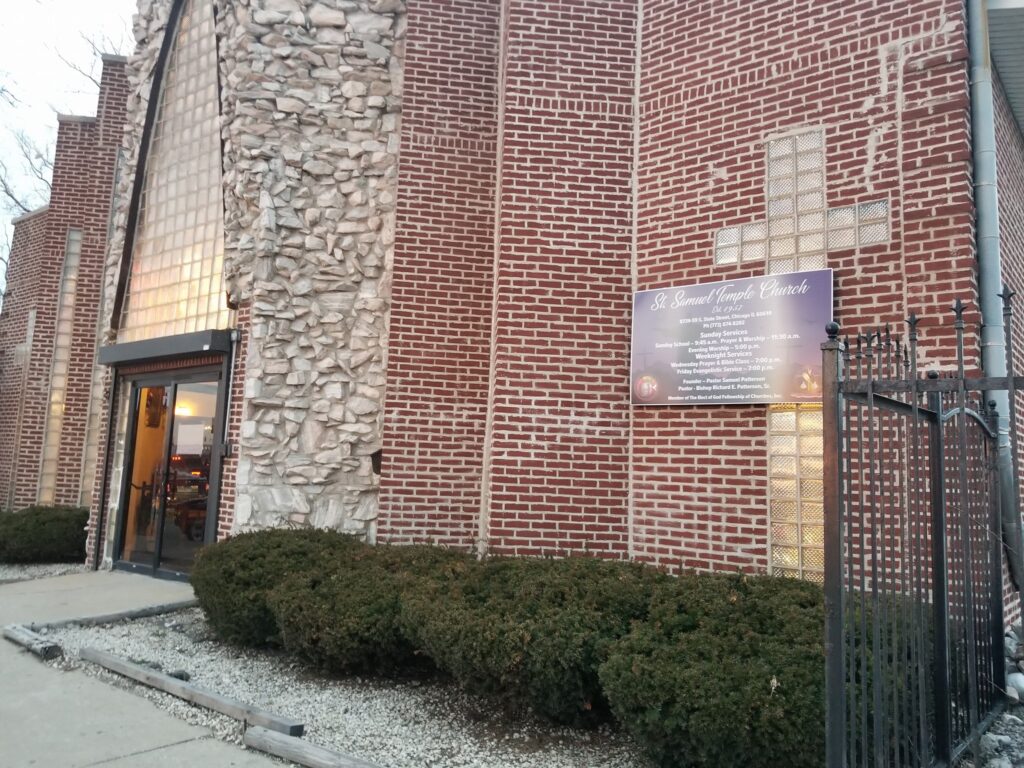
A hub of Chicago’s Black culture, Bronzeville is home to more than 400,000 residents on the south side of the city. The collaboration with Faith 1 Network, a group of the most historic and long-standing Black churches on the south and west sides of Chicago, established a new initative to connect marginalized and under-resourced communities to the same vital health information and resources that are available in more affluent communities.The program is supported with a Community Health Ambassadors program that gives the community and members of the F1N churches an opportunity to serve as champions for the cause of changing health trajectories by helping their neighbors achieve their best quality of life.
Improving HEALTH LITERACY alone could prevent nearly 1 million hospital visits.
The CDC
And save over $25 billion each year.